
Who decides
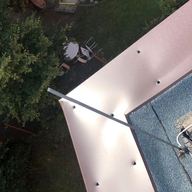
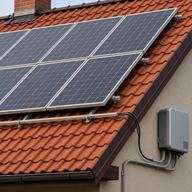
The roof is a common part of the building, so photovoltaics are decided by the SVJ (owners' association) or the housing cooperative, not by individual owners. The majority needed is set by law and the articles of association; before the vote, it is a good idea to check this with the building manager or a lawyer.
How the electricity is split between flats
Electricity from the panels is easiest to use in the common areas: the lift, lighting, pumps, a shared garage. For the flats to benefit too, the split has to be sorted out – for example by electricity sharing under the community energy rules of the Energy Act, or by another technical solution. Each route has different requirements for metering and paperwork.
Connection and documentation
A generating plant on the building is connected to the distribution system according to the distributor's rules (ČEZ Distribuce, EG.D, PREdistribuce). The distributor usually requires an inspection report with the connection application. Along with the finished power plant, the building should also receive the system documentation under ČSN EN 62446-1.
Inspections: initial and periodic
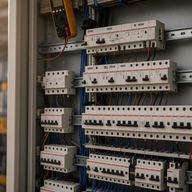
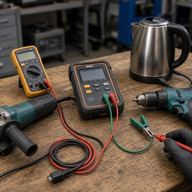
An initial inspection is required before the power plant is put into service. There is no separate interval for PV: periodic inspections follow the environment and use of the building under Annex 4 of Government Decree No. 190/2022 Coll. and the manufacturer's instructions. The inspection checks:
- The DC side: insulation condition and protection, the "Solar DC" marking
- The AC side, inverters and protection
- Surge protection, earthing and bonding of the panel structures
- Compliance with ČSN 33 2000-7-712 and documentation under ČSN EN 62446-1
Don't forget the lightning protection
The panels and their cables must be far enough from the lightning protection system, otherwise lightning may flash over into the installation. That is why it is a good idea to plan the PV and lightning protection inspections together. Lightning protection has a full inspection every 4 years and a visual check at least once a year.
What to keep an eye on after installation
- Dates of the next inspections of the PV system, the lightning protection and the common electrical installation
- Inverter alerts about an insulation fault on the DC side
- The condition of the cabling on the roof after storms and winter
- PV marking on the building for firefighters
Frequently asked questions
Does photovoltaics on a block of flats need an inspection?
Yes. An initial inspection is required before commissioning, and the distributor usually requires it for the connection. Periodic inspections follow Annex 4 of Government Decree No. 190/2022 Coll. and the manufacturer's instructions.
Who pays for inspections of PV on a shared roof?
A power plant on a common part of the building is a matter for the SVJ or the cooperative, so inspections are usually paid from the building's funds. The details are set by the articles of association and the owners' decisions.
Does lightning protection need to be dealt with when installing PV?
Yes. The panels and cables must be far enough from the lightning protection system, otherwise lightning may flash over into the installation. It is a good idea to plan the PV and lightning protection inspections together; lightning protection has a full inspection every 4 years.
How is electricity from photovoltaics on an apartment building divided among individual apartments?
Electricity from the panels can most easily be consumed in common areas such as the elevator, lighting, pumps, or common garage. For apartments to benefit from it as well, distribution needs to be resolved, for example by sharing electricity according to the rules of community energy in the Energy Act, or by another technical solution. Each path has different requirements for metering and administration.