



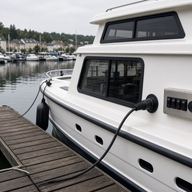




A cable across the pavement: what the law says
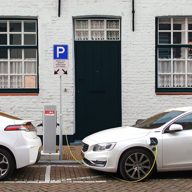
Pavements and roads are for walking and driving, not for running cables. Everyone may use them in the usual way (Section 19 of Act No. 13/1997 Coll., on Roads). Placing things that do not belong to the road on it is special use under Section 25 of the same Act: it needs a permit from the road administration authority, issued with the prior consent of the road owner.
Anyone who uses the road this way without a permit commits an offence (Section 42a), and the law allows a fine of up to 500,000 Kč for it. How the authority assesses a particular cable and what fine it imposes depends on the circumstances. Some municipalities also have their own rules for charging from windows and across the pavement, so it pays to ask at the municipal office before you lay the cable.
A bigger worry than the fine: an injured pedestrian
A cable on the pavement is an obstacle for pedestrians, prams, cyclists and people with impaired sight. If someone trips over it and gets hurt, compensation comes into play – and the person who laid the cable may be liable for it. A cover or a cable ramp reduces the risk, but it does not replace a permit.
Why not to charge via an extension lead
- Charging takes hours at high current; an ordinary extension lead, and a coiled-up cable reel in particular, heats up
- Car and charging-cable manufacturers usually do not allow extension leads in their manuals – check yours
- A connector lying outside on the ground is exposed to water, frost and car wheels
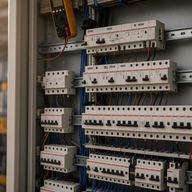
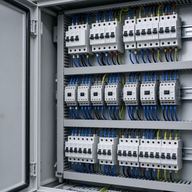
- Under ČSN 33 2000-7-722 a charging point should have its own circuit and a residual current device (RCD); an inspection will show whether your socket is wired that way
How to charge safely at home
- 1
Charge on your own property or in a garage, where the cable is in nobody's way
- 2
For regular charging, have an electrician install a wallbox or a dedicated socket on its own circuit
- 3
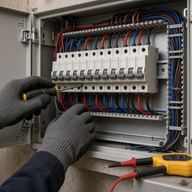
Before putting it into service, have an initial inspection done: it checks the RCD, insulation resistance and loop impedance
- 4
If you can only park on the street, ask your municipality about public charging stations or a permit
How much does a wallbox inspection cost
An inspection of an AC wallbox (11–22 kW) starts at roughly 4,500 Kč. What it covers and when it is mandatory is explained in our article on wallbox inspections.
Frequently asked questions
Can I run a charging cable across the pavement?
Not without a permit. Placing things on the road is special use under Section 25 of Act No. 13/1997 Coll., which requires a permit from the road administration authority with the consent of the road owner. Without a permit it is an offence.
What fine can I get for a cable across the pavement?
The Roads Act allows a fine of up to 500,000 Kč for special use without a permit (Section 42a). The authority sets the actual amount according to the circumstances. If someone trips over the cable, you may also be liable for their injury.
Can I charge an EV via an extension lead?
We don't recommend it. Charging takes hours at high current and the extension lead can overheat; car and charging-cable manufacturers usually do not allow it in their manuals.
Does a home wallbox need an inspection?
An initial inspection is required before the wallbox is put into service. For an AC wallbox of 11–22 kW it costs roughly from 4,500 Kč.